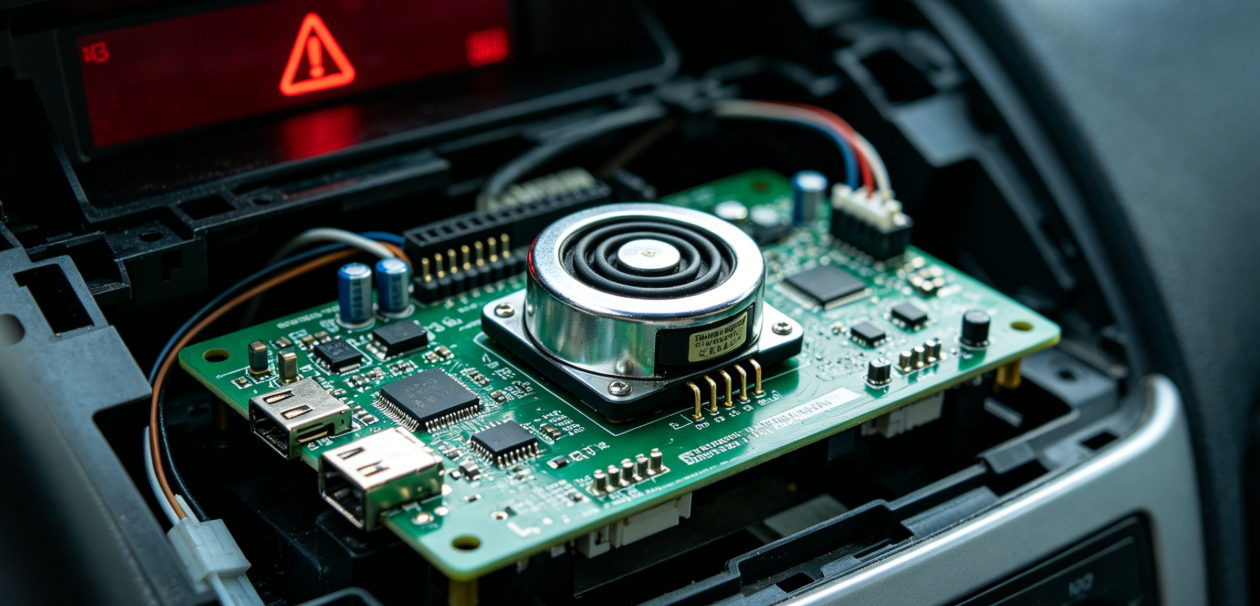
1. What is Active & Passive Buzzer?【Myth: Active needs power, Passive does not.】
Truth:
- Active Buzzer: Built-in driving circuit.
- Sounds when DC power is applied
One-sentence difference:
Power on → sounds = Active
Needs pulse signal to sound = Passive

2. Key Differences
- How it sounds Active: Sounds directly with DC (5V/12V), fixed continuous tone.Passive: Needs pulse signal; tone, speed and rhythm are adjustable.
- Structure Active: Coil + diaphragm + driver circuit.Passive: Only coil + diaphragm, no circuit.
- Difficulty Active: Very easy, two wires only.Passive: Needs MCU/IO to output waveform.
- Size & Cost Active: Larger, higher cost.Passive: Smaller, thinner, lower cost.
- Sound Active: Fixed “beep——”.Passive: Short beeps, key tones, rhythm sounds.
3.When to use Electromagnetic Active Buzzer?
- Features:Stable, loud, plug-and-play. Ideal for alarm, fault warning, status indication
- Security: Smoke detectors, gas alarms, access control
- Industrial: Instruments, control panels, fault alerts
- Automotive: Reverse reminders, failure warnings
- Smart home: Security alarms
- Consumer electronics: Error & completion prompts
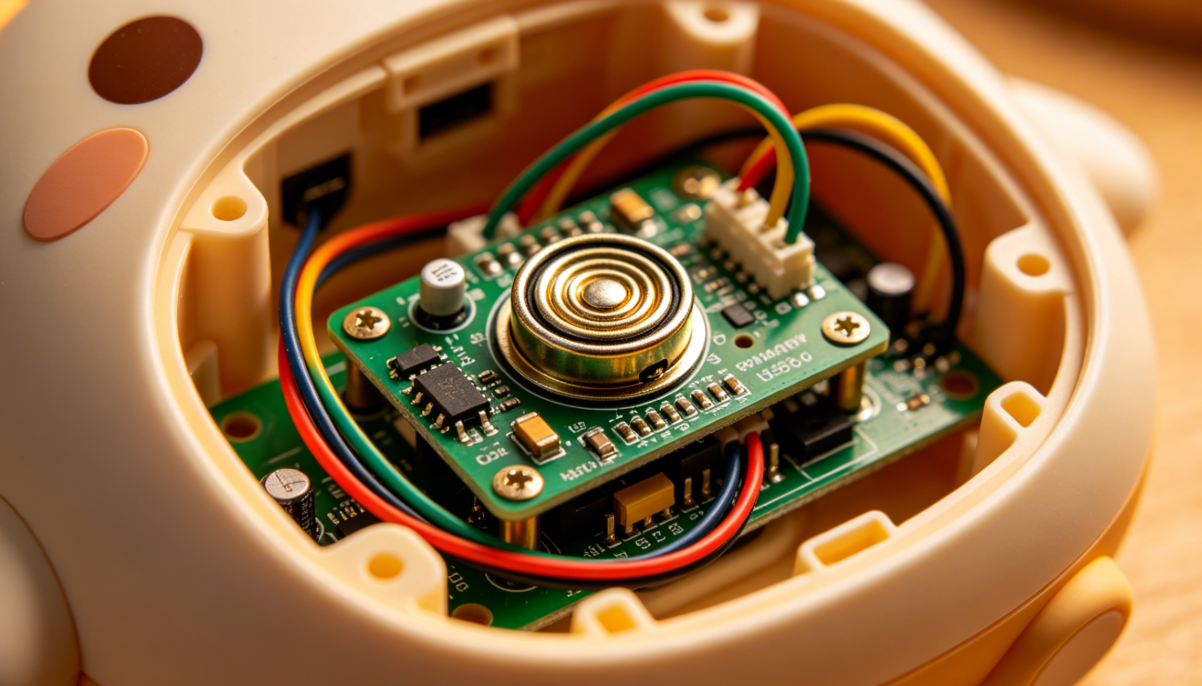
4.When to use Electromagnetic Passive Buzzer?
- Features:Ultra-small, customizable sound, low cost. Ideal for key tones, light prompts, rhythm sounds.
- Compact devices: Smart bands, earphones, mini instruments
- Home appliances & toys: Remote key tones, toy sounds
- Smart hardware: Multi-tone PCB devices
- Medical & communication: Light indication (not strong alarm)
- High-volume low-cost products

5. Quick Selection Guide
- Simple alarm, power-on sound → Active
- Small size, adjustable tone, low cost → Passive
- Continuous alarm → Active
- Key tone / rhythm / short beep → Passive